The Shorewood school counselors take mental health and student wellness very seriously. We meet with students one-on-one to address needs; consult with parents/guardians, teachers, and therapists; and deliver curriculum that addresses suicide awareness and stress reduction. We continue to discuss ways in which we can better reach all students and ensure that both physical and mental wellness are given equal footing and prominence in the lives of our students.
We also think it is important to educate teachers, parents, and others about common mental health disorders, and in doing so, encourage people to seek help and end mental health stigma. Few people talk openly about their struggles with common mental health disorders, yet we know that many individuals will at some point encounter these disorders, like depression and anxiety, either with friends and family, or with themselves. To that end, we hope that parents and guardians will ask their children how they are feeling and reach out for help when needed.
Screen Time
I recently attended a one day workshop on depression and anxiety, led by a leading psychologist at Rogers Memorial Hospital. While information about treatment of depression and anxiety (more on this later) reaffirmed best practices in mental health, I was slightly taken aback by the strong connections academics are making between screen time and mental health. A massive study that surveyed over 500,000 teens found a marked decrease in psychological well-being after 2012. The authors of the study theorize that this decrease in psychological well-being could be due to increased screen time, often in the form of smartphone usage (the study shows a correlation, not causation, but the results are still intriguing).
Here is the abstract from the study:
"In nationally representative yearly surveys of United States 8th, 10th, and 12th graders 1991–2016 (N 1.1 million), psychological well-being (measured by self-esteem, life satisfaction, and happiness) suddenly decreased after 2012. Adolescents who spent more time on electronic communication and screens (e.g., social media, the Internet, texting, gaming) and less time on nonscreen activities (e.g., in-person social interaction, sports/exercise, homework, attending religious services) had lower psychological well-being. Adolescents spending a small amount of time on electronic communication were the happiest. Psychological well-being was lower in years when adolescents spent more time on screens and higher in years when they spent more time on nonscreen activities, with changes in activities generally preceding declines in well-being. Cyclical economic indicators such as unemployment were not significantly correlated with well-being, suggesting that the Great Recession was not the cause of the decrease in psychological well-being, which may instead be at least partially due to the rapid adoption of smartphones and the subsequent shift in adolescents’ time use" (Twenge et. al., 2017).
And here is the link to the actual study, if you are in the mood for a longer read:
http://moglen.law.columbia.edu/CPC/AdolescentHappinessSmartphones-Emotion-2018.pdf
Here is a link to a news article that summarizes the study:
http://time.com/4974863/kids-smartphones-depression/?xid=time-amp-fbshare
Finally, if you would like some hints and tips about how to handle screen time, feel free to check out this article, which includes ideas like:
- having screen-free rooms (especially bedrooms)
- having a central charging station for all phones
- put computers in the living room, so HW comes before TV
- designate media-free times, such as during dinner or in the evening
https://www.cnn.com/2016/10/21/health/screen-time-media-rules-children-aap/index.html
Towards this end, we are going to do our best to ensure that if a student comes to student support in need of a break, he or she will try to not use a cell phone. Instead, we will encourage other forms of stress relief, including coloring, breathing, and progressive relaxation. We will not force students to give up their phones, but rather encourage them to do so.
Depression
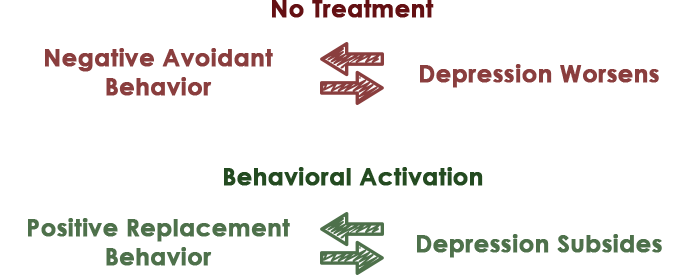
Depression is a common mental health disorder that affects a significant number of adolescents. Symptoms can include both feelings (sadness) and physical effects (insomnia, fatigue, etc.). Depression is often treated with cognitive therapy and/or drug therapy. However, new research suggests that behavioral activation can be just as powerful. When people are depressed, they often experience a negative feedback loop. This typically occurs with a negative life event, a trigger, which results in an emotional response (sadness), which subsequently results in withdrawal and avoidance of previously enjoyable activities. Behavioral activation seeks to disrupt this pattern. Indeed, people need to re-engage in avoided activities. It is important to remind people struggling with depression that while avoidance (sleeping more, not engaging in social activities, avoiding homework) may feel good in the short term, it can, in the long term, make the depression worse and create new problems.
Depression
Depression is a common mental health disorder that affects a significant number of adolescents. Symptoms can include both feelings (sadness) and physical effects (insomnia, fatigue, etc.). Depression is often treated with cognitive therapy and/or drug therapy. However, new research suggests that behavioral activation can be just as powerful. When people are depressed, they often experience a negative feedback loop. This typically occurs with a negative life event, a trigger, which results in an emotional response (sadness), which subsequently results in withdrawal and avoidance of previously enjoyable activities. Behavioral activation seeks to disrupt this pattern. Indeed, people need to re-engage in avoided activities. It is important to remind people struggling with depression that while avoidance (sleeping more, not engaging in social activities, avoiding homework) may feel good in the short term, it can, in the long term, make the depression worse and create new problems.
Check out this informative article on behavioral activation for more in-depth information:
https://cedar.exeter.ac.uk/media/universityofexeter/schoolofpsychology/cedar/documents/BA_Control.pdf
Anxiety
Anxiety is the most common mental health disorder in childhood and adolescence. It often manifests itself via both physiological and emotional symptoms, including restlessness, fatigue, irritability, muscle tension, sleep disturbances, excessive worry, and difficulty concentrating. Similar to depression, anxiety often begins with a negative thought (usually not based on facts), which leads to a feeling (excessive worry), which in turn, leads to a behavior, most often avoidance of the anxiety provoking situation. However, anxiety is very treatable.
Anxiety is best treated by using a form of therapy called cognitive behavioral therapy (CBT). The cognitive aspect of this therapy includes challenging negative thoughts, discussing coping strategies, and examining assumptions and overestimation of danger by looking at past examples and facts from lived experiences. In addition, behaviorally, the best treatment is exposure therapy; children need to be exposed to the anxiety provoking situation, so that, over time, they can learn to tolerate discomfort. Simply avoiding the anxiety will never give children the opportunity to confront their fears in an effective way.
Academic:
Standardized testing season is upon us, and we can happily report that juniors just successfully completed the statewide ACT and the ACT WorkKeys on February 27-28. These scores should be available to juniors in approximately 4-8 weeks, and they can be used as official scores to send to colleges in the fall. ACT make-up will occur on March 20, with WorkKeys make-up the following day. If students plan to take the ACT test again, they should look at act.org to sign up for a Saturday test at a local school.
Upcoming Tests:
Forward testing, a state test that assesses social studies skills, will occur on April 10. All sophomores are required to take this test.
Aspire testing, a pre-ACT test that provides students with a predicted ACT score, will occur on April 17-18. All freshmen and sophomores take this test.
Advanced Placement (AP) testing, available to all students taking an AP course, occurs between May 7-May 17. Students MUST register online by March 7. The website to register is www.TotalRegistration.net/AP/502112.
In addition to testing, counselors continue to meet with students who are academically struggling. We strive to ensure that all students pass ALL of their classes. Course registration has also concluded, and while scheduling does not occur until the summer, we are pleased that virtually all students have completed this process. If you have not yet seen your child's 2018-'19 course choices, please ask to see it, and if you have any questions, feel free to reach out to your child's counselor.
College/Career:
Counselors will be back in the classroom in March and April to meet with sophomores and juniors to discuss the benefits of Family Connection, including:
- Completing an interest survey that matches students' interests with potential careers.
- Creating a resume that can be used for college applications, jobs, and letters of recommendations.
- Completing a college search that matches students' college criteria to universities throughout the country.
- Discussing options post-high school, including entry into the workforce.
Please ask your students about these activities, and feel free to view their results on Family Connection later this spring.


